
Davinci Resolve Studion 21 – What’s New
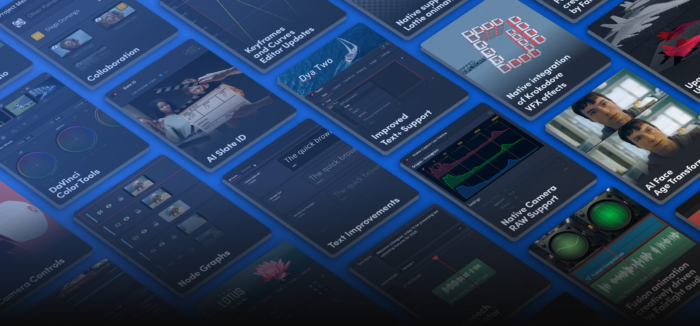
DaVinci Resolve 21 marks a significant evolution in creative post-production, redefining what professionals can achieve within a single platform. Designed for filmmakers, photographers, editors, colorists, visual effects artists, and audio engineers, this latest release introduces a seamless fusion of cutting-edge artificial intelligence, advanced imaging technology, and streamlined workflows that accelerate every stage of content creation.
At the heart of this transformation lies an entirely new approach to visual storytelling. Artificial intelligence now works alongside creators as an intelligent assistant, capable of understanding content, identifying subjects, recognizing faces, and locating specific moments within massive media libraries in seconds. Instead of manually sorting through footage, editors can simply describe what they are looking for and instantly uncover the exact clip, person, object, or spoken phrase they need. This dramatically reduces search time and allows creative teams to focus on crafting compelling narratives rather than managing assets.
Voice creation has also entered a new era. The platform can generate realistic speech from text, produce customized voice models from short audio samples, and provide extensive control over tone, pace, and expression. Whether creating narration, dialogue replacements, or multilingual content, creators gain unprecedented flexibility without compromising quality. At the same time, AI-powered image enhancement tools introduce remarkable control over visual presentation. Focus can be adjusted after filming, motion blur can be minimized, image sharpness can be restored, and even subtle facial imperfections can be refined while preserving natural texture and realism.
One of the most groundbreaking additions is the expansion into professional photography. For the first time, photographers can access the same sophisticated color science and grading technologies trusted by major film productions. Still images can now be manipulated using advanced node-based workflows, allowing intricate, non-destructive adjustments that maintain complete creative flexibility. Large photo collections can be organized into intelligent albums, edited collectively, and managed with powerful search capabilities that recognize people, objects, locations, and visual elements without requiring manual tagging.
Editing workflows have become faster and more intuitive than ever. Motion graphics, transitions, text elements, and visual effects can now be animated directly within the editing environment, eliminating unnecessary context switching. Enhanced keyframing systems provide smoother animation controls and greater precision, while expanded support for modern graphic formats simplifies the integration of professional assets into complex productions. Text tools have been upgraded with multilingual support, advanced typography controls, and character-level styling, enabling creators to build sophisticated titles and graphic packages with ease.
Color grading continues to advance with tools designed specifically for modern delivery demands. Multi-format mastering allows a single timeline to generate multiple HDR and SDR outputs efficiently, reducing repetitive work and ensuring consistency across platforms. The node-based grading environment has become more organized and scalable, making it easier to manage complex projects while maintaining creative control. Teams working across large productions can now create and manage multiple grading versions for entire groups of clips, ensuring visual consistency throughout a project.
Visual effects artists benefit from a major expansion of creative possibilities. A vast collection of new compositing and graphics tools introduces greater flexibility for building sophisticated motion design and VFX sequences. Animation can even respond dynamically to audio, allowing movements and visual elements to react naturally to sound. Improvements to 3D workflows and industry-standard scene formats further strengthen the platform’s capabilities for high-end visual effects production.
Audio post-production has received equally meaningful enhancements. Large projects can now be organized through collapsible track folders, dramatically improving timeline navigation and reducing visual clutter. New audio matching technologies intelligently analyze reference clips and automatically align levels and tonal characteristics, creating smoother transitions and more consistent soundscapes. Custom effect chains can be assembled, saved, and reused across projects, helping audio professionals maintain efficiency while preserving creative consistency.
Behind these creative innovations lies a powerful engineering foundation built for the future. Advanced machine learning technologies accelerate complex tasks while taking full advantage of modern hardware architectures. Support for immersive formats, virtual reality experiences, and next-generation display technologies ensures that creators can deliver content for emerging platforms without compromising quality. Enhanced encoding systems provide faster rendering and superior output fidelity, while support for high-resolution workflows enables real-time editing and grading of demanding formats that were once considered technically challenging.
Content creators working for digital platforms also gain a substantial advantage. Dedicated tools simplify the production of vertical and square video formats, streamline social media publishing, and accelerate the creation of picture-in-picture layouts, animated graphics, and short-form content. Script-based editing capabilities can automatically assemble rough cuts from screenplay formats, reducing repetitive editing tasks and speeding up production timelines.
Collaboration has become more seamless as well. Creative teams can share projects, media, metadata, visual treatments, and edits across locations through cloud-connected workflows. Editors, colorists, visual effects artists, photographers, and audio professionals can contribute simultaneously, creating a truly unified production environment regardless of geographical boundaries.
Ultimately, DaVinci Resolve 21 is more than a software update—it is a complete creative ecosystem designed to eliminate barriers between imagination and execution. By combining intelligent automation, world-class color science, advanced visual effects, professional audio tools, and collaborative workflows within a single platform, it empowers creators to move from concept to final delivery with greater speed, precision, and artistic freedom than ever before.