

Ableton Live Suite for Mac
Ableton Live Suite Free Download for Mac – Professional Music Production Software
Most DAWs make you pick a lane: built for studio production, or built for live performance. Ableton Live Suite refuses to choose. Its Session View lets you improvise with loops and clips the way you’d jam with a band, while Arrangement View gives you the traditional timeline for finishing a polished track — and you can move between the two without breaking your creative flow.
That dual identity is exactly why it’s become the default DAW for electronic musicians, DJs, and sound designers who perform live as much as they produce in the studio. On Mac, Live Suite runs natively across both Intel and Apple Silicon, and the Suite edition bundles in everything — instruments, effects, and the full sound library — so you’re not piecing together plugins from scratch. Whether you’re building a track from a single sampled loop or running an entire live set off your laptop, Ableton Live Suite is built to handle it without switching software.

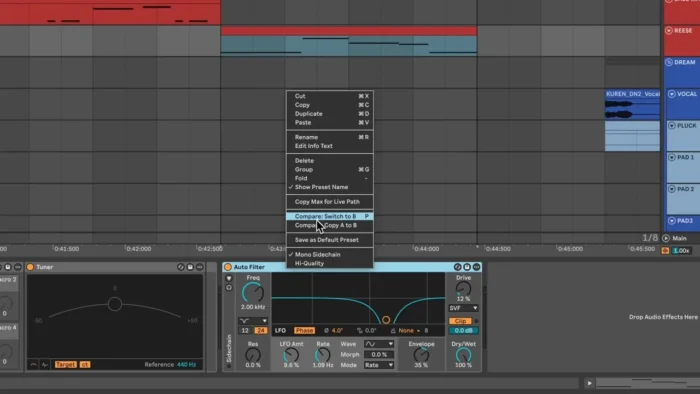
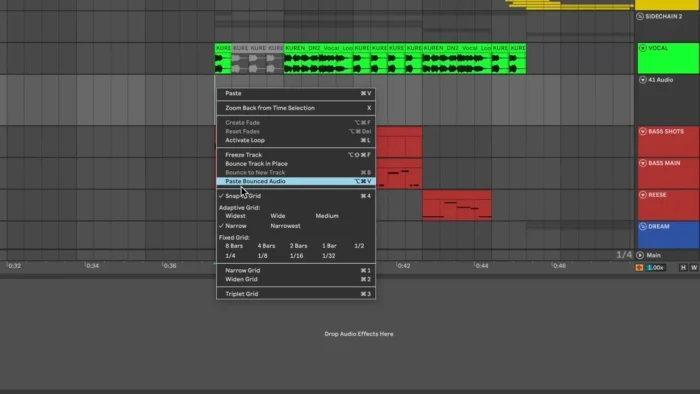
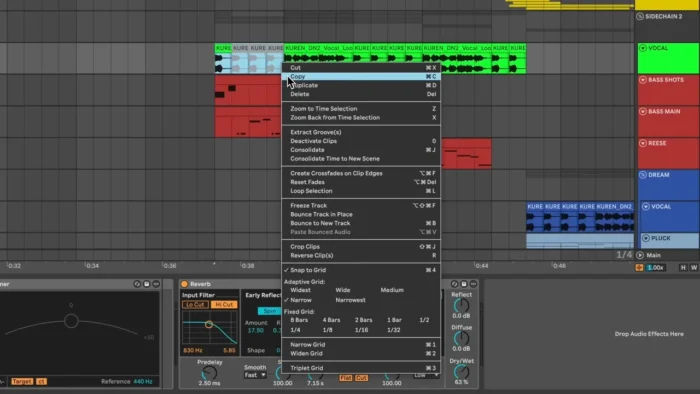
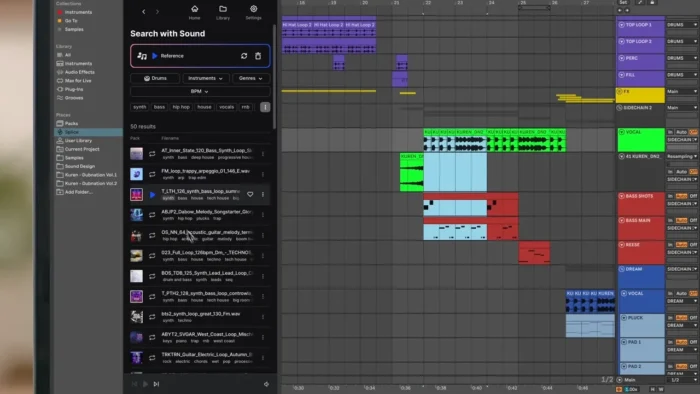
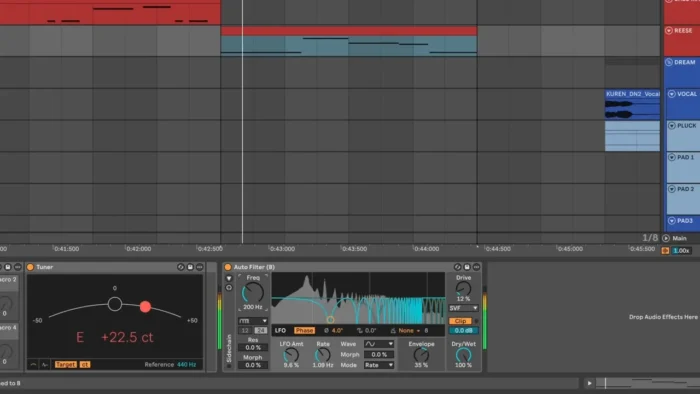
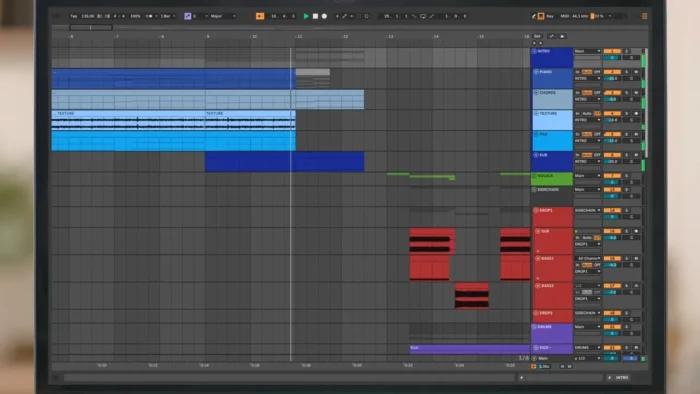
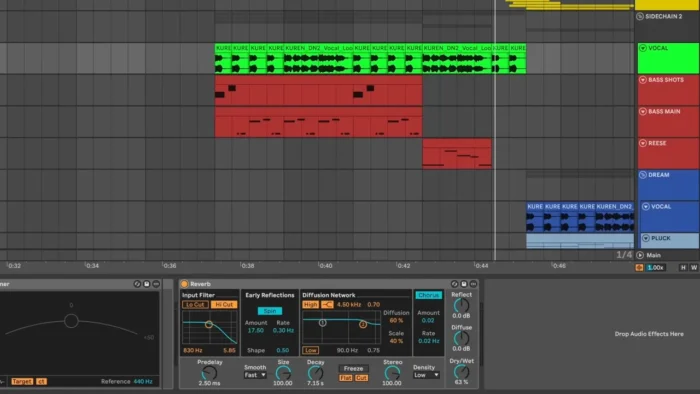
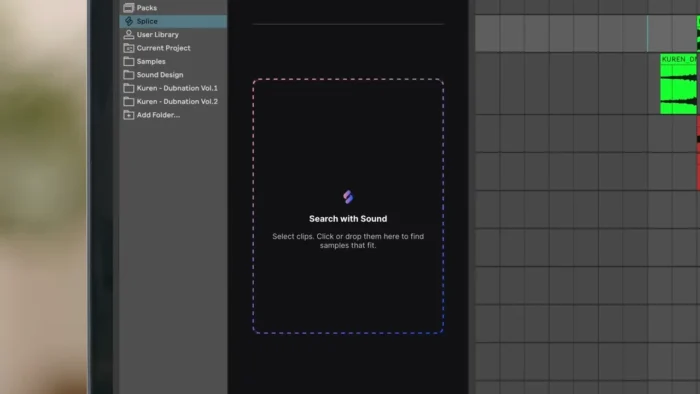
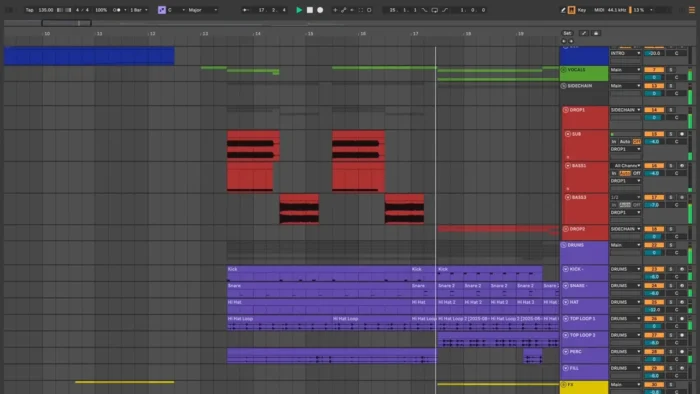
Overview
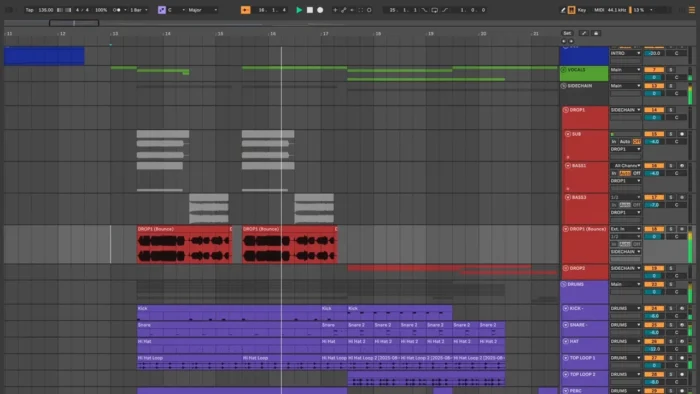
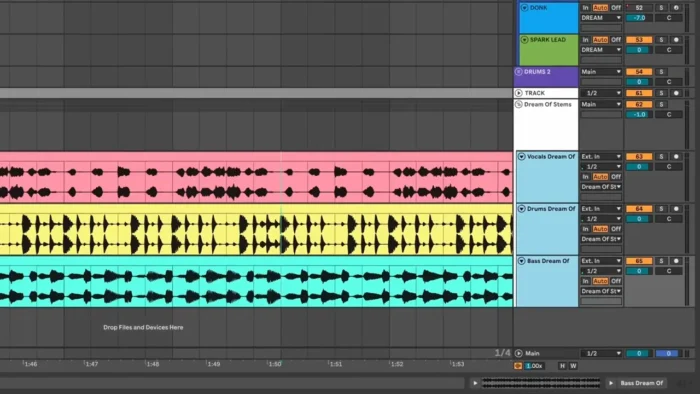
Ableton Live Suite is a full digital audio workstation built around two complementary working environments: a non-linear Session View for experimentation and a timeline-based Arrangement View for finishing songs.
- Purpose: Music production, recording, sound design, remixing, and live performance in one DAW
- Main workflow: Improvise and build ideas in Session View → arrange and finalize in Arrangement View → mix and export
- Ideal users: Electronic music producers, DJs, live performers, sound designers, and composers
- Plugin support: VST and Audio Unit compatible, alongside Ableton’s own extensive instrument and effects library
- Major strength: Genuinely seamless movement between live improvisation and structured production, which most DAWs don’t handle equally well
Key Features
- Session View for Live Performance – Trigger loops and clips without being locked to a timeline, which makes it uniquely suited to live performance, improvisation, and quickly testing arrangement ideas before committing to them.
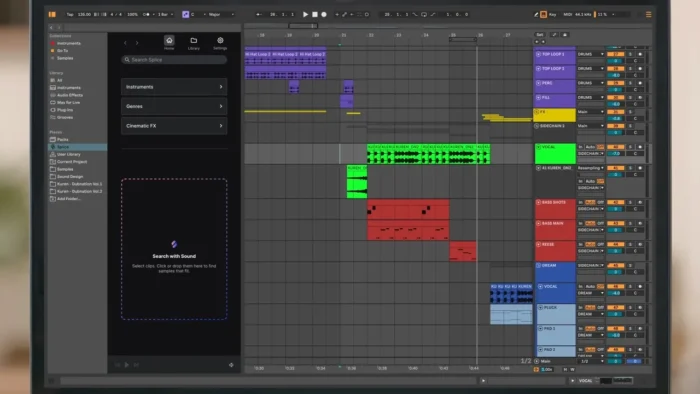
- Arrangement View for Finished Productions – A traditional linear timeline for turning experimental ideas into a complete, polished track or soundtrack, with full automation control.
- MIDI Transformations – Apply ornaments, velocity changes, note variations, and chord transformations to MIDI clips, letting you generate creative variations on an idea without manually redrawing every note.
- MIDI Generators – Intelligent tools that generate melodies, chords, and rhythmic patterns, useful for pushing past writer’s block or exploring a musical direction you wouldn’t have tried manually.
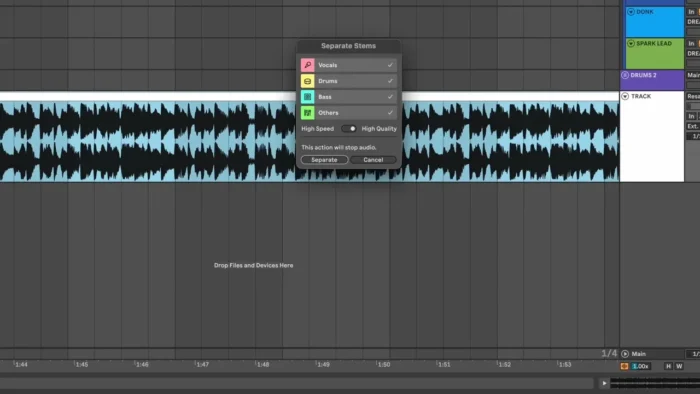
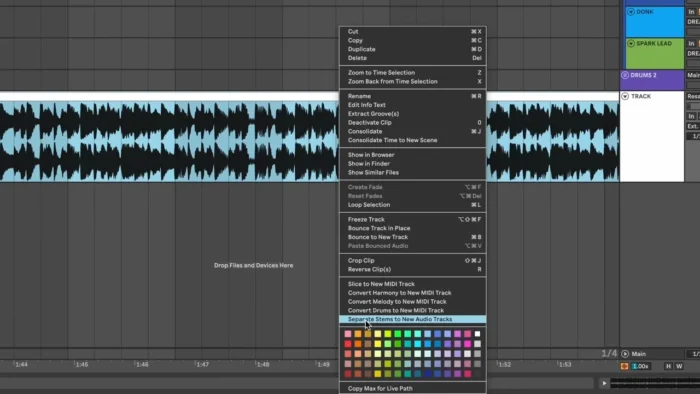
- Audio to MIDI Conversion – Turn a recorded melody, drum pattern, or harmonic idea into an editable MIDI clip, so audio inspiration doesn’t stay locked as an uneditable waveform.
- Meld, Granulator III & Roar – Suite-exclusive instruments and effects: Meld for MPE-compatible expressive synthesis, Granulator III for granular soundscapes, and Roar for saturation and creative distortion that adds real character to a mix.
- Ableton Link – Synchronizes tempo across multiple devices and apps in real time, which is genuinely useful for collaborative sessions or performing alongside other Link-enabled software and hardware.
- Professional Mixing Effects – Glue Compressor for bus compression, EQ Eight for detailed frequency shaping, plus reverb, delay, and modulation tools that cover both corrective mixing and creative sound design.
- Drum Rack & Simpler – Built-in sampling and drum-programming tools that make beat-building and sample manipulation fast without needing third-party plugins.
- VST and Audio Unit Plugin Support – Extend the built-in instrument and effects library with third-party plugins, so your existing plugin collection carries over.
What’s New in Ableton Live 12
- Improved MIDI Editing – Stretch and transform MIDI notes, rearrange by pitch/velocity/duration, and apply scale-based editing for more detailed variations.
- Keys and Scales – Built-in scale tools help keep composing and editing locked to a chosen musical key, useful for producers who don’t want to second-guess every note.
- Expanded Probability Features – Apply probability rules to notes and patterns for evolving, semi-generative performances that change slightly each time they play.
- Improved Browser and Search – Better organization and tagging make finding a specific sound, instrument, or preset faster across a large library.
- Sound Similarity Search – Intelligent search surfaces sonically similar samples, speeding up the process of finding the right sound rather than scrolling manually.
- Enhanced Mixer – Better visual feedback and more detailed controls for a cleaner, faster mixing workflow.
System Requirements
| Component | Minimum | Recommended |
|---|---|---|
| Operating System | macOS 11.0 or later | Latest macOS release |
| Processor | Intel Core or Apple Silicon | Apple M-series chip |
| RAM | 4 GB | 8 GB or more |
| Storage | ~3 GB free disk space | Additional fast SSD space for sample libraries and projects |
| Display | 1024 × 768 | 1920 × 1080 or higher |
| Internet | Required for installation and account activation | Required |
Large projects with heavy sample libraries, extensive automation, or professional mixing sessions benefit from more RAM and fast SSD storage beyond the stated minimums.
Installation Guide
Ableton distributes Live Suite as a direct installer from their own official site, activated through your Ableton account.
- Download the official installer from the Ableton website.
- Open the installation package.
- Follow the on-screen installation instructions.
- Launch Ableton Live.
- Sign in with your Ableton account and complete activation.
Live Suite is sold as a standard software license — check Ableton’s official store for current pricing and whether upgrade paths from Live Intro or Standard editions apply to you.
Pros
- Session View and Arrangement View together cover both live performance and structured production genuinely well
- Suite edition bundles the full instrument, effects, and sound library — no piecing together separate purchases
- MIDI generation and transformation tools genuinely speed up the songwriting process
- Ableton Link makes multi-device and collaborative sessions simple to set up
- Strong native performance on both Intel and Apple Silicon Macs
- Deep third-party plugin support via VST and Audio Unit compatibility
Cons
- Suite edition’s larger sound library and instrument set take real time to explore fully
- Session View’s non-linear workflow has a learning curve for producers used to purely timeline-based DAWs
- Large sample libraries and complex sessions demand more RAM and storage than the base minimums
- Full Suite pricing is a bigger upfront investment than the Intro or Standard editions
Who Should Use Ableton Live Suite?
- Electronic music producers building tracks from loops, samples, and MIDI generation
- DJs and live performers who need Session View’s real-time flexibility on stage
- Sound designers working with granular synthesis and creative processing tools like Roar and Granulator III
- Film and media composers who need both experimentation and precise timeline arrangement
- Recording artists and audio professionals wanting one DAW that covers writing, recording, mixing, and performing
Frequently Asked Questions
Is Ableton Live Suite free? No, it’s a paid, one-time software license. Ableton also offers lighter Intro and Standard editions at lower price points with fewer instruments and effects.
Does Ableton Live Suite run natively on Apple Silicon Macs? Yes, it’s compatible with both Intel and Apple Silicon processors.
What’s the difference between Session View and Arrangement View? Session View is a non-linear environment for improvising with loops and clips, ideal for live performance and experimentation. Arrangement View is a traditional timeline for building and finalizing complete tracks.
Does Live Suite support third-party plugins? Yes, it supports both VST and Audio Unit plugin formats alongside its own built-in instrument and effects library.
What extra instruments come with the Suite edition specifically? Suite includes exclusive tools like Meld, Granulator III, and Roar, along with the complete built-in sound and sample library, which aren’t fully included in the lighter Intro or Standard editions.
Is an internet connection required to use Ableton Live? Yes, for installation and account activation. Actual production work can typically be done offline once activated.
Can beginners use Ableton Live Suite effectively? Yes — the interface is approachable for newcomers, though the full depth of Suite’s instrument library and advanced MIDI tools takes time to master.
Does Ableton Live support live performance setups? Yes, Session View combined with Ableton Link makes it a strong choice for live electronic performance and multi-device synchronization.
Final Verdict
Ableton Live Suite for Mac earns its reputation by genuinely serving two different workflows well — live performance and structured studio production — without forcing a compromise between them. Electronic musicians, DJs, and sound designers get real value from Session View, Ableton Link, and Suite-exclusive tools like Meld and Roar, while the improved MIDI editing and probability features in Live 12 make composing faster and more exploratory.
The Suite edition’s price and depth are a bigger commitment than Ableton’s lighter editions, so producers just starting out might consider Live Intro or Standard first. But for anyone serious about electronic music production, live performance, or sound design on macOS, Live Suite remains one of the most complete and creatively flexible DAWs available.